Utah Hardiness Zones: Northern Benches to South Valleys
Utah gardeners often see one hardiness zone on a map and still wonder why plants struggle in their yard—or why a neighbor can grow something they cannot. The state spans a wide range of winter conditions, and a zone is only one piece of the planting puzzle. Here’s how to read the map, account for local conditions, and use zone information without mistaking it for a planting calendar.
What Utah hardiness zones measure
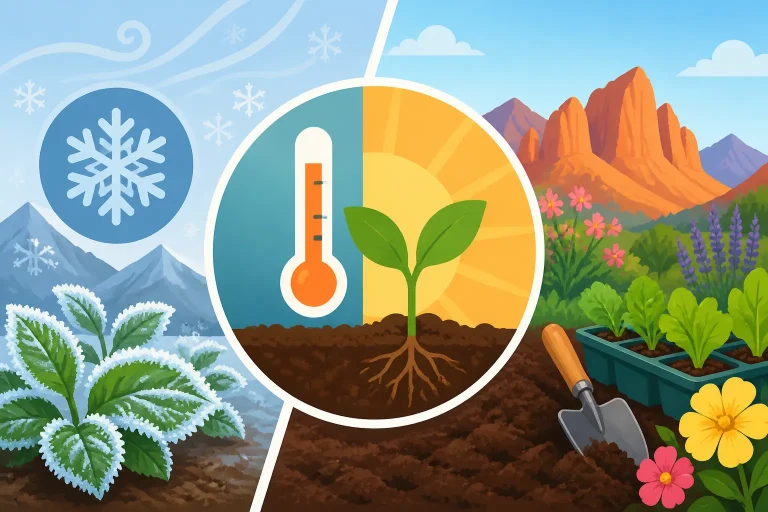
The USDA Plant Hardiness Zone Map groups locations according to their average annual extreme minimum winter temperature. The number on the map describes a broad range of winter cold, not the typical temperature on an ordinary winter day. The letter “a” or “b” divides a numbered zone into smaller temperature bands.
Utah areas fall within USDA Plant Hardiness Zones 4a to 8b. That range reflects the state’s varied elevations, terrain, and climate. It does not mean every part of a city or valley has identical winter conditions, or that a single zone number can predict how a plant will perform in every yard.
A hardiness zone is most useful when you are assessing whether a perennial plant, shrub, or tree is likely to survive typical winter lows in a location. If a plant label lists a hardiness range, compare it with the zone for your area. A plant suited to colder winters may have a better chance of surviving than one whose stated range is warmer than your site. But even a plant listed for your zone can be damaged by unusual cold, poor drainage, winter wind, or a sudden change in conditions.
The map is a planning tool, not a promise. It summarizes one important climate factor, while leaving out many conditions that affect plants:
- How long the growing season lasts
- When spring frost risk usually eases
- When fall freezes commonly arrive
- Whether the site gets intense summer heat
- How much wind, snow cover, or winter sun plants receive
- Whether soil drains well or stays waterlogged
- How much water is available during dry weather
Those limits matter especially in Utah, where nearby sites can differ substantially. A zone is a useful first filter when choosing plants, but it cannot replace observation of your own yard and a planting schedule suited to your elevation and season.
For more on what the map can and cannot tell you, see What USDA Plant Hardiness Zones Measure: Extreme Winter Cold Limits. If you are comparing a zone update with garden timing, Why a Hardiness Zone Update Does Not Alter Spring Vegetable Dates explains why a changed winter classification does not automatically change a vegetable sowing date.
How Utah’s landscape creates a wide zone range
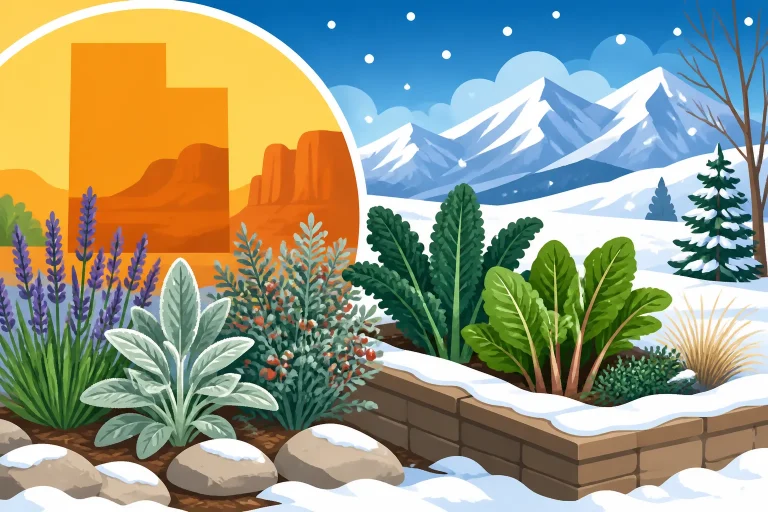
Utah’s climate is shaped by elevation and terrain as much as by its position on a map. The state includes higher mountain areas, benches above valleys, broad interior valleys, and lower-elevation southern landscapes. These settings differ in winter cold and growing conditions, which helps explain the statewide range from 4a to 8b.
Northern benches and higher ground
Higher elevations and exposed sites can experience colder winter conditions than nearby lower areas. A bench may also face more wind or have less protection from surrounding buildings and landforms. Even when two nearby properties fall in the same mapped zone, these details can affect whether a marginally hardy plant makes it through winter.
The word “bench” describes a local landform, not a guarantee of a particular zone. Benches vary in elevation, exposure, and relationship to nearby slopes. A north-facing or wind-exposed yard may behave differently from a sheltered, sunny yard at a similar elevation. Use the map to narrow your plant choices, then look at the conditions on your property.
Valley floors and cold-air movement
Low areas can collect cold air on clear, calm nights. Cold air tends to move downhill and settle in lower places, while slopes may drain it away. This means a valley-floor garden can experience a different frost pattern from a nearby slope, even if both locations are close together.
This effect can be important for fruit trees, flowering shrubs, and early vegetable planting. A plant may survive winter lows but bloom early during a warm spell and then lose flowers to a later cold snap. That is a different risk from the winter cold captured by a hardiness zone. Coping with Cold Air Drainage in Low-Lying Utah Gardens looks more closely at how yard position can affect frost exposure.
Southern valleys and lower elevations
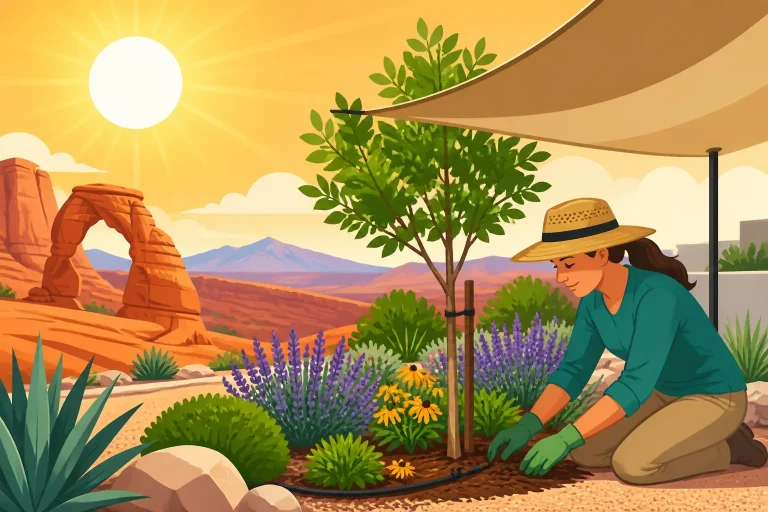
Lower-elevation southern parts of Utah generally have a longer, warmer growing season than higher northern or mountain settings. That does not make every heat-loving plant easy to grow there. Intense summer heat, dry air, wind, water availability, and soil conditions still shape what succeeds.
A warmer zone can indicate that winter lows are less severe on average, but it does not tell you whether a plant tolerates a hot afternoon, alkaline soil, or prolonged dry conditions. Some plants that survive winter may still struggle through summer. For heat and sun considerations, see Managing Heat Stress and Sun Exposure in Utah Landscapes.
Why a statewide map cannot settle a yard-level question
A map has to divide a varied landscape into categories. The boundaries are helpful for broad comparisons, but they cannot show every slope, courtyard, drainage path, or sheltered corner. A boundary line should not be treated as a sharp change in what will grow: conditions on either side may be similar, and two locations within the same mapped zone may still differ in exposure and frost behavior.
The practical takeaway is to think in layers. First identify the mapped zone for your area. Then consider elevation, slope, exposure, cold-air movement, and the plant’s own needs. The more marginal a plant is for your zone, the more important those local details become.
Why a hardiness zone is not a planting calendar
The biggest mistake gardeners make with a zone map is using it to choose exact planting dates. Hardiness zones describe winter cold, not the date when soil is ready to work, the likelihood of a spring frost, or the right week to sow a vegetable crop.
A tomato, for example, may be suitable for a region’s summer climate and still be damaged if it goes outdoors before frost danger has eased. A perennial may tolerate winter in a zone but need well-drained soil to avoid root damage. A fruit tree may survive winter but flower at a time when a late cold snap can harm blossoms.
| Gardening question | Is a hardiness zone enough? | What else to consider |
|---|---|---|
| Is a perennial likely to survive typical winter lows? | It is a useful starting point | Site exposure, drainage, snow cover, and plant establishment |
| When should vegetables be planted outdoors? | No | Frost risk, soil warmth, crop type, and local growing season |
| Will a plant tolerate a hot, exposed bed? | No | Summer heat, afternoon sun, wind, and water needs |
| Will a fruit tree produce reliably? | No | Winter survival, bloom timing, pollination, and spring frost exposure |
| Can a plant grow in a container through winter? | Not by itself | Root exposure, container size, shelter, and watering conditions |
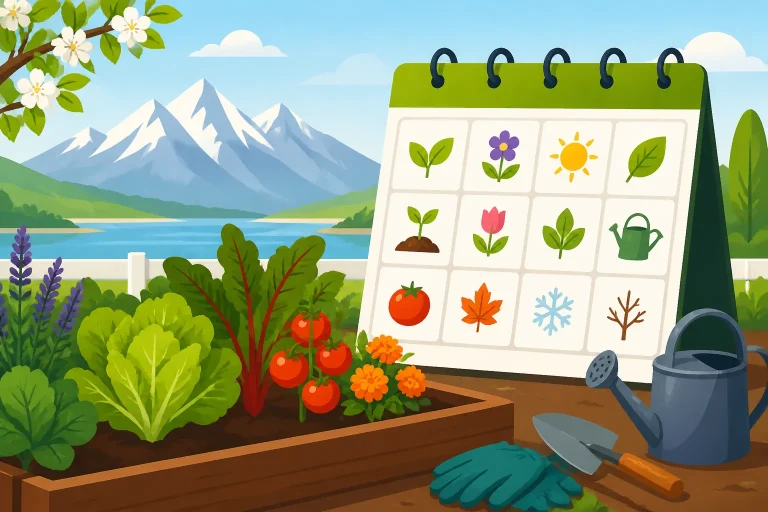
For vegetables, timing depends on whether a crop tolerates cool soil and light frost or needs warm soil and a frost-free period. Leafy greens and other cool-season crops follow a different schedule from heat-loving crops. A zone map will not tell you when either group is safe to plant. Start with a regional schedule such as Utah Vegetable Planting Calendar: What to Sow Spring to Fall, then adjust for your elevation and the conditions in your yard.
Frost dates are also not fixed appointments. A date describes a probability for a particular weather station or period, and actual conditions vary from year to year. Your garden may be warmer or colder than a nearby station because of slope, buildings, wind, or cold-air pooling. For a more local approach, Matching Your Garden Schedule to Utah Elevation and Slope helps connect planting decisions to site conditions.
Soil warmth can be a separate constraint. A warm afternoon does not necessarily mean the soil has warmed enough for a heat-loving crop. Planting into cold soil can slow growth and leave seedlings exposed longer to stress. Using Soil Thermometers to Time Spring Vegetable Sowing covers how to use soil temperature alongside frost information.
A dependable planting plan combines several pieces of information rather than relying on one number:
- Use the zone map for winter survival. Check the hardiness range of a perennial, shrub, or tree before buying it.
- Use local frost information for outdoor timing. Treat expected dates as probabilities rather than guarantees.
- Check soil conditions before planting. Consider warmth, moisture, drainage, and whether the ground is workable.
- Match the schedule to the crop. Cool-season and warm-season crops have different needs.
- Adjust to the yard. A sheltered bed and an exposed slope may not be ready at the same time.
This approach avoids both common extremes: assuming a plant cannot succeed because a broad map boundary is nearby, and assuming it will succeed simply because its label includes the zone shown for your area.
Microclimates: the conditions inside your mapped zone
A microclimate is the set of local conditions in a specific part of a yard. It can make a small space warmer, colder, windier, sunnier, or wetter than the surrounding area. Microclimates do not change the zone assigned on the map, but they can change how a plant performs.
Elevation and slope
Even modest differences in elevation can affect exposure and cold-air movement. A slope may shed cold air, while a low pocket can hold it. South-facing slopes generally receive more direct sun than north-facing ones, while a steep or exposed site may dry out faster or face stronger winds.
When comparing planting dates or plant choices, note whether your garden is on a bench, slope, or valley floor. A broad regional calendar may be a useful starting point, but the site itself helps determine whether you should wait, protect a plant, or choose a more tolerant option. How Utah Elevation and Cold Air Drainage Shift Spring Planting Dates explores these effects in more detail.
Buildings, walls, and paved surfaces
Walls and buildings can block wind and reflect warmth. Paving and other hard surfaces absorb heat during sunny periods and release it later. These features may create a warmer growing pocket, but the benefit is not automatic: reflected heat can stress plants, and a sheltered spot can still be exposed to freezing conditions.
Before relying on a warm wall as protection, observe how the area behaves through a full season. Does it stay sunny in winter? Does reflected afternoon sun scorch leaves in summer? Does rain reach the bed, or does an overhang keep it dry? Those answers help you decide whether the spot is suitable for a plant that is borderline for your zone.
Shade, wind, and snow cover
Shade changes more than the amount of light a plant receives. It may slow soil warming in spring, while dense shelter can reduce drying winds. Wind can increase stress by drying foliage and exposing plants to cold conditions. Snow can insulate the ground when it remains in place, but the cover is not dependable everywhere or in every winter.
Take note of where snow gathers and where it blows away. A protected bed may receive a different level of winter cover from an open one. Likewise, a sunny bed beside a wall might warm sooner in spring but also expose plants to faster temperature swings. For how to assess heat and shade around a garden, see Selecting the Sunniest Site for Tomatoes and Peppers.
Soil and water
The zone map does not describe soil. In Utah, soil may be heavy, compacted, fast-draining, or affected by salts. A plant’s roots can struggle even when winter temperature is within its listed range. Poor drainage can be particularly troublesome for plants that need air around their roots, while very fast drainage may make it hard to maintain consistent moisture during dry weather.
Before planting a long-lived tree or shrub, check the site’s drainage and the plant’s tolerance for local soil conditions. For a vegetable bed, consider whether water soaks in evenly or runs off the surface. Guide to Managing Utah Alkaline Soils and Garden Amendments can help you think through soil limits, while Is Your Soil Soaking Up Water or Losing It to Surface Runoff? focuses on how water moves across a site.
Keep simple observations. Record where frost lingers, where spring soil dries first, which beds get wind, and whether plants repeatedly struggle in one spot. Notes from your own yard can be more useful than trying to assign a precise zone to every corner.
How to look up and interpret your Utah zone
A zone lookup is a good first step when you are planning a landscape or checking a plant label. It should not be treated as a precise address-level diagnosis. Map categories cover areas, and local conditions can differ within them.
Use a location-based map carefully
Look up the area where you garden using the USDA Plant Hardiness Zone Map or a reliable map tool. ZIP codes can help identify a general area, but a ZIP code may include more than one local condition. The mapped zone is an area-level guide, not a guarantee about the temperature at a specific house or bed.
For a practical lookup process, see Looking Up Your Utah USDA Plant Hardiness Zone by ZIP Code. If you are comparing the zone with nearby terrain, Mapping Utah Plant Hardiness Across Valleys and Mountains provides another way to think about regional variation.
Read the full zone label
Check both the zone number and its letter. The letter marks a smaller temperature subdivision within the numbered zone. When a plant label lists a range, the lower, colder end of the range matters if your garden is exposed or experiences colder conditions than nearby sheltered sites.
Do not assume that a plant is guaranteed to thrive just because your location falls within its listed range. A plant at the cold edge of its range may need a protected site, good drainage, or extra attention while it establishes. Conversely, a plant just outside a broad mapped range may sometimes grow in a sheltered microclimate, but that is a risk rather than a certainty.
Compare maps without overreacting to boundaries
If a map places your area near a boundary, avoid treating the line as a hard biological barrier. Map boundaries are useful for organizing information, but winter conditions change gradually across much of the landscape. Local elevation and exposure may matter as much as a small difference in mapped classification.
If a map update changes the zone assigned to an area, that can be relevant to winter plant survival. It does not automatically mean that the best week to plant vegetables has changed, or that frost risk has disappeared. Keep the distinction clear: the map helps with perennial winter tolerance; local seasonal information helps with planting dates.
Verify plant information
Use the plant’s listed hardiness range as a screening tool, then check whether it also needs conditions you can provide. Consider:
- Sun exposure and heat tolerance
- Soil drainage and texture
- Water needs after establishment
- Mature size and spacing
- Resistance to local winter wind or drying
- Whether the plant is suited to containers or only in-ground planting
If the label gives only a zone range, seek additional growing information before investing in a large tree or a group of shrubs. A plant may be winter-hardy but poorly matched to an exposed, hot, dry, or poorly drained site.
Choosing plants and setting realistic expectations
Use the zone as a starting filter, not as a complete plant-selection system. For a plant that is comfortably within its stated hardiness range, you may have more flexibility in choosing a site. For a plant near the edge of its range, be more cautious and select a protected location with suitable soil and moisture.
Perennials, shrubs, and trees
Long-lived plants deserve the most careful zone check because replacing them can take time and money. Before planting a tree or shrub, consider both winter minimums and the growing conditions it will face through the year. A cold-hardy plant may still be a poor fit if it cannot tolerate the site’s summer heat, soil drainage, or water supply.
Think about how the plant will be exposed in winter. A sheltered planting near a building may experience less wind than an open yard, but reflected heat can also encourage early growth. A plant that begins growing during a warm spell may be vulnerable if cold returns. No site can remove all weather risk, so a plant’s suitability should include more than its zone range.
For a first landscape, choosing plants with a hardiness range that includes your mapped zone is generally a safer strategy than repeatedly testing plants near the boundary. Then narrow the options based on sunlight, soil, mature size, and water needs. If water use is an important part of your decision, Selecting Drought-Tolerant Plants for Hot Utah Exposures covers the separate challenge of heat and limited moisture.
Vegetables and annual flowers
Hardiness zones are less useful for choosing the exact dates to sow annual crops and flowers. Their success often depends on the length and timing of the warm season, soil temperature, and frost risk. A vegetable can be suitable for Utah and still fail if planted too early or placed where it receives too much heat.
For seasonal crops, use a planting calendar that separates crop groups and regional timing. Cool-season vegetables can often be planted earlier than crops that need warm soil and frost-free conditions. Flowers also differ: some tolerate cool conditions, while others are damaged by cold. Check each crop’s requirements and use local timing guidance rather than treating your zone as a sowing date.
If you garden in a small space, the conditions around containers can differ sharply from the ground. Pots may warm quickly in sun and lose moisture faster in wind. Their roots are also more exposed to winter cold than roots in the ground. A container plant may need a different winter strategy even when its listed zone appears suitable.
Plants at the edge of their range
A plant near the cold limit of its range may survive some winters but be damaged in a harsher one. The risk is greater in exposed sites, areas where snow cover is unreliable, or locations with repeated freeze-thaw cycles. Rather than relying on one favorable season, think about whether you are prepared to protect, replace, or accept the loss of a marginal plant.
You can reduce risk by placing it in a site that suits its needs, avoiding waterlogged soil, and not encouraging late-season growth with excessive inputs. However, protection has limits. A sheltered location may reduce some stresses without changing the region’s long-term winter conditions.
Ask these questions before planting a marginal choice:
- Is the plant’s stated range close to the zone for my area?
- Is this spot warmer or more exposed than the rest of the yard?
- Does it need excellent drainage or consistent moisture?
- Could a late frost damage early flowers or new growth?
- Am I willing to provide protection or replace the plant if it fails?
The answers help set expectations. They also prevent the common mistake of interpreting one successful winter as proof that a plant is reliably suited to the site.
A practical way to use zones in your planting plan
A useful Utah planting plan combines the map with local observations, weather information, and the needs of each crop or landscape plant. Keep the process simple enough to use each season, then refine it as you learn how your yard behaves.
- Identify the general mapped zone for your area. Use a map lookup to get a starting point, while remembering that it describes an area rather than a specific planting bed.
- Record the site’s characteristics. Note elevation relative to nearby ground, slope direction, wind exposure, shade, buildings, and places where cold air or snow tends to collect.
- Separate winter survival from planting timing. Use hardiness information for perennials, shrubs, and trees. Use frost risk and soil conditions to schedule vegetables and annuals.
- Check the plant’s full needs. Compare its hardiness range with your area and review its requirements for sun, heat, drainage, and water.
- Choose conservative options for exposed or marginal sites. If a plant is near its cold limit, consider a more protected location or a plant with a wider tolerance.
- Track outcomes. Make a brief note when plants suffer winter injury, bloom early, or struggle in summer. Patterns across seasons can reveal which parts of the yard are especially warm, cold, dry, or windy.
- Adjust one decision at a time. If something fails, determine whether winter cold, spring frost, summer heat, soil, or watering was the likely cause before changing several things at once.
For vegetable timing, use a calendar designed for Utah and adjust it to local elevation and conditions. Utah Planting Calendar: Scheduling Sowing Windows by Season can help organize sowing windows, while How Utah Gardeners Find Exact Spring Planting Windows focuses on deciding when a site is ready. Gardeners in higher or colder settings can also consult Why Mother’s Day Planting Rules Fail in Higher Utah Valleys rather than relying on a date-based rule of thumb.
For landscape plants, keep the same distinction in mind. The zone tells you about typical winter cold; the yard tells you how that cold reaches the plant. A sun-facing wall, a wind corridor, a low pocket, and a well-drained slope can all affect results. Those details do not make the zone map irrelevant. They make it more useful by showing where its broad guidance needs local interpretation.
Frequently Asked Questions
What hardiness zones are found in Utah?
Utah areas fall within USDA Plant Hardiness Zones 4a to 8b. The range reflects the state’s varied elevation and climate. A local map lookup is needed to identify the general zone for your area.
Does my zone tell me when to plant vegetables?
No. A hardiness zone describes average annual extreme minimum winter temperature. Vegetable planting dates depend on crop type, frost risk, soil warmth, and local growing conditions.
Can a plant grow outside the zone shown for my area?
It may grow in a favorable microclimate, but success is less certain, especially when the plant is near its cold limit. Consider exposure, drainage, shelter, and the possibility of colder-than-usual winters before relying on that choice.
Why might a plant struggle even when its label includes my zone?
The zone does not account for every condition. Summer heat, wind, poor drainage, water stress, cold-air pooling, and spring frost can all affect plant performance.
Should I change my planting dates if a map shows a different zone?
Not automatically. A zone change relates to winter cold classification, not necessarily to spring frost timing or soil temperature. Use local seasonal guidance when scheduling crops.
Disclaimer
This article is for general informational purposes only and does not constitute professional advice. Laws, prices and regulations vary by location and change over time. Consult a qualified professional for guidance on your specific situation. Utah Gardening Guide is not a government agency and is not affiliated with any university extension, state department of agriculture or other government agency.