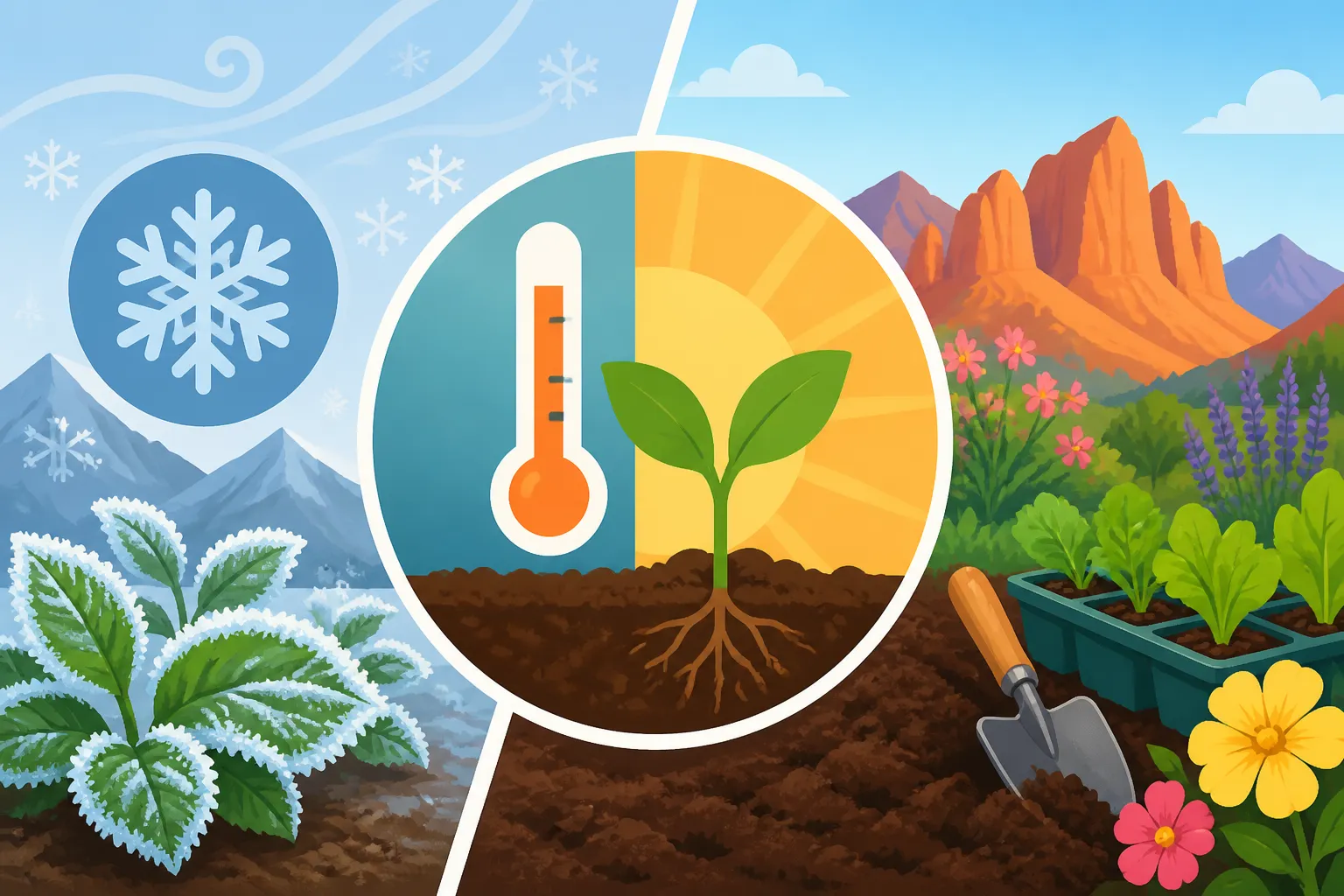
Utah Spring Planting Guide: Timing Soil Warmth and Frost Risks
Utah spring planting can feel like a race between warming soil and a late freeze. The problem is that neither a calendar date nor a sunny afternoon tells the whole story. This guide explains how to judge soil workability, soil warmth, crop cold tolerance, and local frost exposure so you can choose a sensible planting window for your garden.
Why Utah spring planting is not one date
A planting calendar is useful for organizing the season, but it cannot account for every garden’s conditions. Utah gardens vary in elevation, exposure, surrounding buildings, slope, and how quickly the soil dries and warms. Those differences can make two nearby yards ready for the same crop at different times.
The season also presents two separate questions:
- Can the soil be worked without damaging it?
- Can the crop tolerate the soil and weather conditions it will face after planting?
A bed may be dry enough to prepare while still being too cold for a heat-loving crop. Conversely, a crop that tolerates chilly conditions may be ready before the garden is warm enough for other vegetables. Treating all planting as a single spring opening date tends to create unnecessary risk.
It helps to think of spring planting as a sequence of decisions rather than a date to circle. Start by observing the soil. Then consider the crop’s cold tolerance and whether it is being direct-sown or transplanted. Finally, check the local forecast and judge the conditions in the actual part of the garden where the crop will grow.
This approach is more useful than relying on a familiar holiday, a neighbor’s planting date, or a warm spell. A warm day can make outdoor work pleasant without signaling that the soil has warmed consistently. Likewise, a cool forecast does not automatically mean that every crop must wait. The answer depends on what you are planting and what protection, if any, you can provide.
For a broader seasonal outline, Utah Planting Calendar: Scheduling Sowing Windows by Season can help you see how spring fits into the full growing season. For decisions about your immediate yard, use that kind of calendar as a starting point, then make the final call from soil and weather conditions.
Check whether the soil is workable before preparing beds
“Workable” is about more than whether a shovel can break through the ground. Soil can be soft enough to dig yet too wet to handle well. Walking on or cultivating wet soil can compact it, smear its structure, and leave clods that are difficult to prepare for seed. Those problems can linger after the surface dries.
Begin with a simple observation. Look at the bed after rain or irrigation and note whether water is standing, whether the surface is sticky, and whether soil clings heavily to tools. If the ground is wet enough to compress into a slick lump, wait rather than trying to force the season forward. When the soil has drained, gently check a small area instead of digging across the whole bed.
A workable bed should crumble when disturbed rather than form a smear. It should not be so wet that tools leave shiny, compressed surfaces. These observations are more helpful than assuming that a certain month means every garden bed is ready. Soil texture and drainage matter: a well-drained bed may become workable while a heavier or lower-lying area remains wet.
Avoid rushing bed preparation
If the soil is still wet, postpone digging, tilling, and heavy foot traffic. This is especially important when preparing a new bed or changing the layout. Working wet ground can make the job harder later, even if the bed looks neat at first.
You do not need to turn the entire garden as soon as spring arrives. If only part of the bed has drained, work only where conditions are suitable and avoid stepping on the rest. Permanent paths or stepping boards can help keep foot traffic out of growing areas, particularly when spring rain leaves the surface soft.
For an existing garden, remove loose debris and check for areas where water collects. If runoff or puddling is a recurring problem, address the drainage issue rather than repeatedly working the soil while it is saturated. Fixing Poor Drainage in Planted Utah Garden Beds offers a closer look at diagnosing and addressing that challenge.
Prepare without overworking the soil
Once the bed is workable, prepare only as much as needed for the crop and planting method. Direct-sown seeds need a reasonably even seedbed, while established transplants need a planting area that can accept their root ball without being packed hard. Avoid pulverizing the soil into fine dust. A loose, crumbly surface is generally more useful than powdery soil that can crust after watering.
If you are adding compost or another amendment, base the decision on the bed’s condition and the needs of the plants rather than treating every spring as a reason to add material. Too much disturbance can undo useful soil structure. If soil texture or fertility is uncertain, Choosing the Right Soil Test for New and Established Utah Gardens can help you decide whether testing would be useful.
Workability is a gate, not a complete planting signal. Passing it means you can prepare the bed responsibly. It does not guarantee that a crop will tolerate the soil temperature or a forecast cold snap. Check those separately.
Use soil warmth to judge crop readiness
Air temperature can change quickly, and the warmth of a sunny afternoon can be misleading. Soil temperature changes more gradually, so it can offer a useful clue about whether the root zone is warming. A soil thermometer helps replace guesswork with a direct observation, especially when you are planning to sow seeds that need warmer conditions.
Take readings in the part of the bed where the crop will grow. A sunny raised bed can behave differently from shaded ground beside a wall or a low spot that stays damp. A reading from the edge of a bed may not represent the planting area, so measure near the intended seed row or transplant location. Take observations consistently rather than making a decision from a single unusually warm afternoon.
A thermometer is a decision aid, not a universal planting permission slip. Different crops have different requirements, and the same crop may respond differently depending on whether it is direct-sown or transplanted. Use seed packets or crop-specific recommendations to interpret the reading. Do not substitute a generic soil-temperature target for instructions that are specific to the crop.
For more detail on taking and using readings, see Using Soil Thermometers to Time Spring Vegetable Sowing. The practical value is not just knowing a temperature; it is comparing that temperature with the crop’s needs and noticing whether the soil is steadily warming or fluctuating.
Read soil conditions alongside the forecast
Soil warmth matters, but it is only part of the picture. A warm bed can still be exposed to a damaging cold night. A forecast of mild daytime weather does not necessarily describe overnight conditions, and garden-level temperatures can differ from those at a distant weather station.
Consider the forecast for the specific days after planting, not just the day you plan to sow. Direct-sown seed is exposed at the soil surface before it establishes. Transplants may have already developed leaves and roots in protected conditions and can react differently to a sudden change outdoors. The crop’s cold tolerance and planting method should guide how cautious you are.
Some gardeners use a simple log to track soil conditions. Record the reading, the recent weather, and how the bed looks or feels. The goal is not to build a complicated monitoring system. A short record can show whether the soil is warming steadily or whether a sunny spell has created a temporary impression of readiness.
Distinguish cool soil from cold-sensitive planting
Cool-season crops can generally be considered earlier than crops that need sustained warmth, but that does not mean every cool-season crop should go into any damp, cold bed. Seeds still need suitable conditions to germinate, and seedlings need conditions that let them establish. Matching the crop to the bed is more reliable than labeling the whole garden “ready.”
Warm-season vegetables usually need more patience. If the soil is cool, seeds may take longer to emerge, and a transplant may struggle to resume growth. Waiting for suitable warmth can be more effective than sowing early and hoping the weather catches up. For crop-specific timing, Planting Warm-Season Crops in Utah: Soil Heat and Frost Rules and Waiting for Warm Weather Before Planting Peppers in Utah provide more focused guidance.
Match spring timing to crop cold tolerance
Utah State University Extension groups spring vegetables by cold tolerance into four major categories, A-D. That grouping matters because vegetables do not all respond to cool spring conditions in the same way. A calendar that treats every crop alike can encourage planting tender crops before their conditions are suitable or delay crops that can handle an earlier start.
According to Utah State University Extension, hardy vegetables, including asparagus, broccoli, cabbage, onions, peas and spinach, can be planted as soon as the soil is workable in early spring. That gives gardeners a practical starting point for the hardiest crops, while still leaving room to judge the condition of the particular bed.
Use cold tolerance as a way to organize your choices, not as a promise that weather cannot cause problems. A hardy crop may tolerate cool conditions better than a tender one, but saturated soil, a sudden severe cold snap, or poor establishment can still interfere with growth. Planting early is most useful when the soil is suitable and the forecast does not present an avoidable risk.
Separate direct sowing from transplanting
A seed sown outdoors and a transplant moved from a sheltered space are not interchangeable. Direct-sown seeds must germinate in the soil where they are planted. A transplant has already begun growing, but moving it outdoors exposes it to a new environment and can interrupt growth if the change is abrupt.
For direct sowing, follow crop-specific guidance for soil conditions and sowing depth. Avoid sowing into ground that is waterlogged or likely to crust before the seedling emerges. Mark the row clearly so you can tell emerging seedlings from weeds, and keep the surface appropriately moist without washing seed out of place.
For transplants, consider whether the plant has been gradually exposed to outdoor conditions. A plant raised indoors or in a protected setting may need time to adjust to sunlight, wind, and cooler nights. Moving it into the garden on a mild afternoon does not remove the risk of a cold night that follows. Moving Tender Transplants Outdoors Once Utah Frost Threat Passes explains how to make that transition more cautiously.
Choose the crop that fits the current conditions
If the soil is workable but still cool, start with crops suited to cool conditions rather than trying to make every part of the garden productive immediately. If a bed is warm and protected, it may be suitable for a different crop than an exposed bed nearby. Planting in stages lets you use the conditions that are available without forcing the rest of the garden into the same schedule.
This does not mean you must plant every hardy crop at once. You can choose a manageable portion of the bed, observe how it performs, and continue as conditions improve. Staggering sowings can also spread harvest rather than producing everything at the same time. For related planning, see Cool-Season Crops to Sow in Early Spring Across Utah and Staggering Garden Sowings Every Few Weeks for Continuous Harvest.
Read the seed packet or transplant instructions for the specific crop and variety you have. If those directions differ from a general calendar, use the crop-specific information and local recommendations to understand why. Plant labels and extension guidance are more useful when treated as a match for a crop’s needs, not as a guarantee against weather.
Judge frost risk in your own garden
A frost date is an estimate of risk, not a switch that makes a yard safe on a particular morning. Weather varies from year to year, and conditions at a weather station may not match conditions beside your house. A garden in a low, enclosed area can experience colder air than an exposed site nearby, while a sheltered spot may warm sooner during the day.
Use local forecast information as a guide, then take a second look at the garden’s layout. Cold air can settle in low areas, and wind exposure can make a site more stressful for young plants. A wall, fence, slope, or tree canopy can change how a specific bed warms and cools. These features do not eliminate frost risk, but they help explain why planting dates differ within the same neighborhood.
To compare conditions across locations, Matching Your Utah Garden to Nearby Weather Station Data can help you think about which observations are relevant to your yard. A weather station is most useful when its elevation and setting resemble your garden. If those differ, treat its information as one input rather than a precise forecast for your bed.
Think beyond the last frost estimate
Before planting a frost-sensitive crop, look at the forecast trend and the likely exposure of the bed. Ask whether the crop can tolerate a brief cold spell, whether it is a seedling or an established plant, and whether you can protect it if conditions turn unfavorable. If the answers are uncertain, waiting can be the simplest way to avoid losing a transplant.
Hardy crops and tender crops should not be managed by the same frost rule. A cool-tolerant crop may continue growing in conditions that would harm a heat-loving crop. This is why a single “safe planting day” is not a useful answer for the whole vegetable garden.
If a cold night is forecast after planting, decide in advance whether you can cover the crop and secure the cover. A cover can reduce exposure in some circumstances, but it is not a guarantee against every freeze or a substitute for choosing an appropriate planting window. Covering Utah Seedlings When a Sudden Spring Freeze Hits discusses short-term protection, while Using Row Covers to Shield Utah Gardens From Light Frosts covers how covers fit into garden protection.
Keep protection practical
Protection is most useful when it is ready before the forecast turns urgent. Keep suitable covering material accessible, and understand how it will be supported so it does not crush seedlings. Check that the material is secured against wind and that plants are not left trapped under a cover when daytime conditions become warm.
If frost risk remains high and protection would be difficult, delay planting tender crops. Waiting is not a failure to use the season; it is a way to avoid gambling with plants that are not suited to the current conditions. When crops are already outside, observe how they respond and adjust care rather than assuming a cover has solved every problem.
Build a planting sequence for your yard
A flexible sequence is easier to manage than a single all-at-once planting day. It lets you begin with suitable crops when the bed becomes workable, then add crops as the soil warms and frost risk eases. It also helps avoid preparing or planting more ground than you can maintain.
Start with a garden map, even if it is only a quick sketch. Note sunny and shaded areas, low spots, places that dry quickly, and areas that receive wind. Mark where each crop is planned. This makes it easier to choose a suitable bed for early planting and notice patterns from one season to the next.
Then use a simple decision process:
- Check the bed. Is the soil drained and workable, or is it sticky, saturated, or easily compacted?
- Identify the crop’s needs. Is it hardy, cool-tolerant, or sensitive to cold? Is it being direct-sown or transplanted?
- Check soil warmth. Use a thermometer when temperature matters, and compare the result with crop-specific recommendations.
- Review the forecast. Look at conditions after planting, particularly overnight risk for vulnerable crops.
- Choose the planting method. Sow, transplant, protect, or wait according to the crop and conditions.
- Keep notes. Record what you planted and what the weather and soil were like, so you can make better local decisions later.
This is not a rigid schedule. If the soil is wet, the first step may be to wait. If conditions are suitable for hardy crops but not tender ones, plant only the crops that fit. If a cold snap appears in the forecast, protect a vulnerable crop or delay it.
Use small plantings to test a site
A small initial planting can be a useful way to learn how a bed behaves. If the seedlings emerge and grow well, you have a better indication of how that location handles the season. If the soil stays wet or cool, you can adjust later plantings rather than risking the entire supply of seed or every transplant.
This is especially useful when trying a new bed or gardening in a site with mixed conditions. The edge near a wall may warm differently from the open center. A raised bed may drain differently from the ground around it. Observe rather than assume that a nearby location behaves the same.
Let the garden’s layout guide the order
An exposed bed may call for a more cautious start than a sheltered one. Low areas may be vulnerable to cold-air pooling, while a sunny slope can dry and warm differently. A bed beside a structure might be sheltered but shaded, which can affect how quickly it heats. Consider all of these details together instead of treating warmth, drainage, and frost exposure as separate calendar questions.
If elevation and cold-air movement affect your property, How Utah Elevation and Cold Air Drainage Shift Spring Planting Dates offers more context. If your garden is in a valley or on a bench where conditions vary locally, observing your own site may be more useful than applying a broad regional average.
Use the planting sequence to stay flexible, not to create a new rule that every crop must follow. Keep a short list of what can go in now, what needs warmer soil, and what should wait until the frost threat has eased. That simple separation can reduce last-minute decisions and prevent tender transplants from going outside merely because the rest of the garden is ready.
Avoid common spring planting mistakes
Many spring setbacks come from treating a convenient signal as if it answered every question. A date on a calendar, a warm afternoon, or a neighbor’s successful planting can be a helpful clue, but none describes the exact soil, crop, or exposure in your garden.
Planting because the surface looks dry
The top of the bed can dry before the soil below is ready to work. Check more than the surface before digging or cultivating. If the soil beneath is still sticky or saturated, give it time. Working wet ground can damage its structure and leave a rough bed that is difficult to manage.
Planting all crops together
Different crops tolerate spring conditions differently. Planting tender vegetables simply because hardy crops are already growing increases the chance that cold soil or frost will set them back. Separate planting plans by crop need, and let the warm-season crops wait for suitable conditions.
Relying on a warm spell
A few warm afternoons can make the garden feel ready, but a brief warm stretch does not establish that soil is consistently warm. Check the soil itself and the forecast after planting. If the crop requires warmth, wait until conditions better match its needs.
Treating a frost estimate as a guarantee
A forecast or average date can help with planning, but it cannot guarantee that the next cold night will miss your garden. Yard-level conditions differ, and a tender plant may be more vulnerable than an established hardy crop. Keep flexibility in the plan and be ready to protect or delay vulnerable plants.
Forgetting that transplants need adjustment
A plant that has grown in a protected environment may react to direct sun, wind, and cool nights even when it is no longer indoors. Gradual exposure and careful timing can help it adjust. Avoid placing a tender transplant outside and assuming that a mild daytime forecast covers the conditions it will face overnight.
Overpreparing the bed
Spring enthusiasm can lead to unnecessary digging, especially if the soil is wet or the bed is already in reasonable condition. Prepare only what is needed for planting. Keeping foot traffic and heavy cultivation out of growing areas helps preserve the soil structure you want for the season.
Ignoring records from the same yard
A brief note can be surprisingly useful: the location of a bed, whether it held water, what was planted, and how the crop responded. Over time, these observations reveal which areas warm first, where frost lingers, and which planting choices work in your particular yard. A general calendar becomes more useful when paired with your own site history.
Frequently Asked Questions
Can hardy vegetables go into the garden before warm-season crops?
Often, yes, if the bed is workable and the crop is suited to cool conditions. Keep the crop’s specific needs in mind, and do not take the earlier start as a signal that every vegetable is ready.
Does a soil thermometer tell me exactly when to plant?
No. It gives you a reading to compare with crop-specific recommendations. Use it alongside soil drainage, the planting method, and the forecast rather than treating any single reading as a universal go-ahead.
Should I plant after the first warm spell?
Not automatically. Check whether the soil is warming in the planting area and whether cold weather is expected after planting. A short warm spell may not represent the conditions a seed or transplant will experience over the following days.
What should I do if a frost is forecast after planting?
Consider the crop’s cold tolerance, its stage of growth, and the conditions in your yard. Protect vulnerable plants when practical, or delay planting tender crops until the risk is lower. A cover can help in some situations but should not be treated as guaranteed protection.
Sources
- Utah State University Extension — Suggested Vegetable Planting Dates for Utah | USU (checked November 15, 2026)
- Utah State University Extension — Ask an Expert: Timing Can Be Tricky for Spring Planting | USU (checked November 15, 2026)
Disclaimer
This article is for general informational purposes only and does not constitute professional advice. Laws, prices and regulations vary by location and change over time. Consult a qualified professional for guidance on your specific situation. Utah Gardening Guide is not a government agency and is not affiliated with any university extension, state department of agriculture or other government agency.