Managing Heat Stress and Sun Exposure in Utah Landscapes
Utah heat can leave plants scorched, wilted, or stalled, but extra water is not always the answer. Sun exposure, wind, soil, plant choice, and irrigation all affect how a landscape handles hot, dry weather. This guide explains how to spot heat stress, adjust planting choices, and protect established beds, lawns, and containers without treating every struggling plant the same way.
Why Utah heat stresses plants
Heat stress is not simply a matter of a plant getting too much sun. High temperatures can increase water loss from leaves and soil, while dry air and wind can make that loss harder to replace. A plant may struggle because its roots cannot take up water quickly enough, because the soil is dry, or because its leaves are exposed to conditions they cannot tolerate. Several causes can also occur at once.
Utah landscapes vary widely. A sunny garden in a sheltered neighborhood may behave differently from an exposed site on a bench or a yard where wind funnels between buildings. Soil also matters: compacted ground, shallow planting areas, and raised beds can dry at different rates. Even nearby parts of one yard can have different conditions, depending on shade, slope, paving, and airflow.
Hot weather can cause temporary wilting, leaf-edge browning, faded color, flower drop, or slowed growth. Those signs are clues, not diagnoses. A plant can wilt when the soil is dry, but it can also wilt when roots are waterlogged or damaged and cannot move water effectively. Browning may result from heat and dryness, but it can also have other causes. Before changing irrigation or applying a product, check the soil and look at the whole plant.
Utah State University Extension notes that most turf grasses are adapted to cool weather and may stop growing or go dormant during summer heat; in those conditions, they stop growing and often go dormant. That distinction matters: a lawn that has slowed during hot weather is not automatically dead or in need of extra fertilizer. For more help deciding what a lawn needs, see Why Utah Grass Struggles and Enters Summer Dormancy.
A useful starting point is to match the response to the likely cause:
| What you notice | What to check | A reasonable first response |
|---|---|---|
| Leaves wilt during the hottest part of the day but recover later | Soil moisture below the surface, and whether the plant gets afternoon sun | Check again when temperatures ease; avoid reacting to midday appearance alone |
| Leaves remain wilted and the root area feels dry | Whether water is reaching the root zone or running off the surface | Adjust how water is delivered so it soaks in rather than running away |
| Leaf edges look dry or scorched on the exposed side | Afternoon sun, reflected heat, wind, and soil moisture | Reduce exposure where practical and check moisture before increasing watering |
| A plant looks limp while soil stays wet | Drainage, soil compaction, and signs of root trouble | Pause extra watering and assess drainage rather than assuming drought |
| A lawn slows or changes color in hot weather | Whether the grass is dormant, dry, or damaged | Check soil and irrigation coverage before adding fertilizer or changing care |
This table is a troubleshooting aid, not a diagnosis. A plant’s normal appearance, recent weather, and site conditions all matter. If the signs are spreading or the cause is unclear, seek local diagnostic guidance rather than guessing at a treatment.
Read the site before changing the planting plan
The most helpful way to manage sun stress is to understand where it occurs. Watch the yard through the day and notice when direct sunlight reaches each bed, wall, patio, and container. Pay attention to the difference between morning exposure and the hotter afternoon period. Also note where reflected heat comes from: walls, fences, paving, and large areas of stone can make a planting spot harsher than open air alone suggests.
Wind deserves equal attention. A sunny place sheltered by a fence may retain moisture differently from an exposed corner where leaves and soil dry quickly. Wind can also make shade less effective if a structure does not block it. Look for patterns rather than relying on a general description such as “full sun.” A label or map cannot tell you how your particular bed behaves in the afternoon.
Notice changes across the yard after a hot spell. Do plants near paving struggle more than the same kind of plant in a bed with open soil? Does a shrub look healthy on its shaded side but scorched on the side facing a wall? Do containers dry faster than nearby ground? These comparisons can help distinguish a plant-selection problem from a watering or exposure problem.
A simple site assessment can include:
- Sun: Identify where direct light falls, especially during the hotter part of the day.
- Reflected heat: Check surfaces near struggling plants, including walls, paving, and fences.
- Wind: Observe whether foliage moves constantly or the soil dries quickly in exposed places.
- Soil: Check whether water soaks in, drains away, or sits near the surface.
- Plant condition: Compare newer growth with older leaves and sheltered parts of the same plant.
- Water delivery: Confirm that irrigation reaches the planting area rather than missing it or running off.
Keep a short record of what you observe. Notes about which areas dry first, where shade falls, and how plants respond after watering can make later changes more deliberate. A phone photo taken from the same spot can help compare plant condition over time without relying on memory.
Utah’s varied terrain and neighborhood conditions make broad regional labels an incomplete guide to a particular yard. Why Statewide Zone Maps Miss Utah Neighborhood Microclimates explains why local conditions matter. For heat management, the practical lesson is to plan around the exposure and moisture of the actual planting site, not just the general climate of the area.
When a plant consistently struggles in its location, consider whether a site change is realistic. A movable container can be shifted temporarily. A young plant may be easier to relocate than a mature one. For an established shrub or tree, improving nearby conditions may be more practical than moving it. A change should address the stressor: adding shade will not fix poor drainage, and watering more will not remove reflected heat.
Choose plants that fit the exposure
Plant selection is a lasting way to reduce heat stress. A plant that is poorly matched to an exposed, dry site may need ongoing attention, even when watering is managed well. Conversely, a plant suited to the conditions can often cope with hot weather more reliably once established.
Utah State University Extension recommends selecting Utah shrubs to withstand intense sunlight, low relative humidity, drying winds, and limited seasonal precipitation. That guidance is especially useful for exposed areas where several stresses occur together. When choosing a shrub, check whether its light and moisture preferences fit the exact planting spot, not just the general yard.
Compare a plant’s needs with the site before buying or planting. Read the plant label or consult a reliable local plant reference for its light, water, soil, and mature-size requirements. A shrub described as drought tolerant may still need appropriate care while it establishes, and a plant suited to sun may not tolerate the hot, reflected exposure beside a wall. “Tough” does not mean suitable for every spot.
Consider the full mix of conditions:
- Light: Is the site sunny throughout the day, or does it receive shade during the hottest period?
- Moisture: Does the plant prefer consistently moist soil, or can it tolerate drying between waterings?
- Wind: Is the plant sheltered or exposed to drying airflow?
- Soil and drainage: Can the soil support the plant’s needs without staying waterlogged or drying unusually fast?
- Mature size: Will the plant eventually shade neighboring plants or compete with them for space and water?
- Maintenance: Are you willing to provide extra care during establishment or extreme weather?
For a sunny border, choose a mix of plants that share compatible light and water needs. Grouping plants with similar moisture requirements makes irrigation easier to manage than placing a water-hungry plant beside a drought-tolerant one. It also helps avoid applying extra water across an entire bed just to support a small area of thirsty plants.
For more targeted ideas, see Selecting Drought-Tolerant Plants for Hot Utah Exposures and Matching Water-Wise Plants to Utah Yard Conditions. These topics can help narrow the options, but confirm that a particular plant fits your soil, exposure, and available water. A plant’s general reputation is less useful than a close match between its needs and the conditions where it will grow.
Trees and shrubs can provide useful shade as they mature, but their placement calls for planning. Consider where their shade will fall, how large they may become, and whether their roots and water needs fit the space. Do not rely on a new planting to protect a bed immediately; it may take time to develop the canopy you have in mind. In the meantime, use temporary measures or select plants that can tolerate current conditions.
For existing plants that are otherwise healthy, avoid making a permanent change based on a brief heat spell alone. A plant may recover when conditions improve, while another may show recurring stress each summer. Use repeated observations to decide whether it needs a different location, a change in care, or replacement with a better-matched plant.
Manage water without guessing
Watering is often the first response to wilting, but more water is not always better. Start by checking soil moisture in the root area rather than judging by the surface alone. The top can look dry while the soil below is still moist, or a damp surface can hide a dry root zone. Check more than one part of a bed if conditions vary, and pay attention to differences between containers, raised beds, and in-ground plantings.
If the soil is dry where the roots are growing, water in a way that allows moisture to soak into the root zone. Water that runs over the surface or leaves a bed quickly may not be helping the plant. If the soil remains wet, adding more water can worsen the problem. The right adjustment depends on soil, plant type, root depth, weather, and the irrigation system; there is no single schedule that fits every Utah yard.
Before turning on sprinklers or changing a timer, confirm that the system is reaching the plants that need water. Check for clogged or misdirected heads, uneven coverage, and runoff on slopes or compacted areas. A bed can look as if it has been watered while a dry patch remains beyond the spray. For a practical way to assess moisture before watering, see Checking Soil Moisture Before Turning on Utah Sprinklers.
Help water reach the roots
When water runs off rather than soaking in, changing the delivery method may help. Applying water in a way that gives it time to infiltrate can be more useful than extending a watering session that continues to lose water at the surface. If the soil is compacted, very dry, or sloped, consider whether the bed needs attention to improve infiltration. Avoid working wet soil heavily, since that can damage its structure.
Drip irrigation can direct water close to plant roots, but it still needs to be checked. Emitters can be blocked, misplaced, or inadequate for the area being watered. A system that works well for a shrub may not cover a wide bed uniformly. Observe the soil after irrigation rather than assuming water delivery is effective because equipment is running.
Established trees and shrubs often need a different approach from shallow-rooted annuals or vegetables. Directing water to the root area is more useful than wetting only the trunk or the soil immediately beside it. For specific considerations around woody plants, see Deep-Watering Woody Plants During Utah Summer Heat Spells. Follow recommendations suited to the plant and site rather than applying the same irrigation pattern across the whole landscape.
Protect moisture in the soil
Mulch can reduce direct sun on soil and slow moisture loss from the surface. It may also make soil temperatures less exposed to rapid swings. Use mulch in a way that leaves room around plant stems and trunks, and make sure it is not being used to conceal a drainage problem. A covered surface can still be too wet or too dry underneath, so continue checking soil moisture.
Organic mulch changes as it breaks down, while rock cover behaves differently and can add heat around plants in an exposed place. The best choice depends on the planting, site, maintenance needs, and appearance you want. For more on how these materials compare, see Wood Mulch vs Rock Cover for Arid Utah Landscape Beds. Whichever material you choose, it should support the plant and soil rather than create a new problem.
In raised beds, exposed edges and limited soil volume can mean conditions differ from nearby in-ground beds. Check them separately instead of assuming the same irrigation approach will work everywhere. Watering Schedules for Utah Raised Beds in Arid Summer Winds offers more detail for these growing spaces. In all beds, use the condition of the root zone and the plant as your guide.
Reduce harsh exposure with shade and smart design
Shade can protect plants from the most intense exposure, but it should be used thoughtfully. A plant that needs sun may grow poorly if kept in deep shade, and a shade structure can trap heat or interfere with airflow if it is poorly placed. The aim is not necessarily to block all light; it is to reduce the exposure that is causing damage while preserving conditions the plant needs.
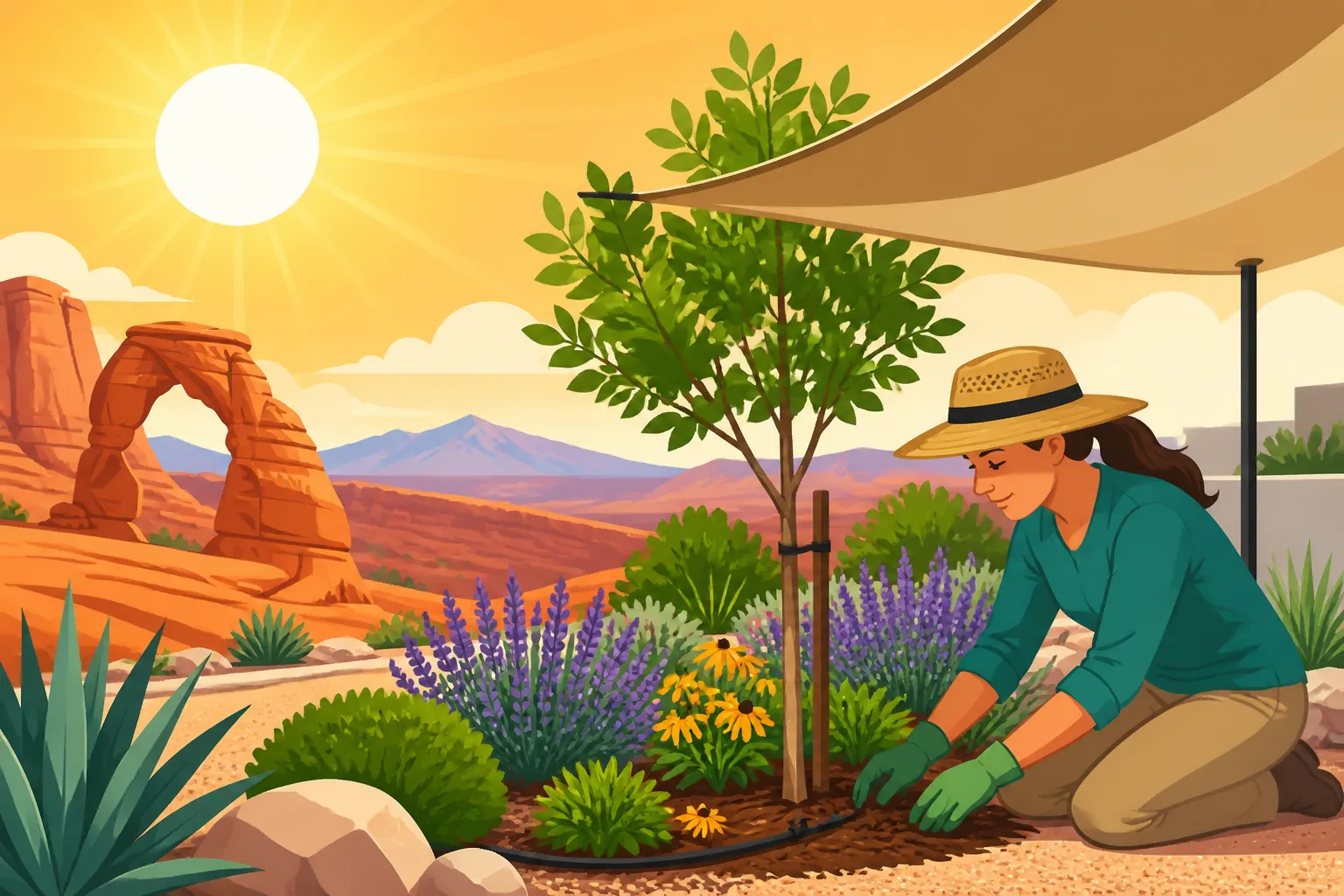
Temporary shade can be useful for young transplants, newly planted shrubs, and plants that show clear signs of sun injury. A movable screen, shade cloth, or nearby temporary structure can soften exposure during a difficult period. Check the plant after making a change. If it improves, that is useful evidence; if it continues to struggle, investigate soil moisture, roots, and other stressors as well.
For vegetable beds, shade cloth can reduce direct sun exposure, but its effect depends on the crop, the site, and how it is installed. Keep airflow in mind and check the bed regularly so the cover does not create a separate problem. See Using Summer Shade Cloth Over Utah Beds During Heatwaves and Using Shade Cloth to Shield Utah Crops From Midsummer Sun for more focused advice on protecting garden crops.
In landscape beds, shade can come from trees, structures, or the way plants are arranged. A taller plant may shelter a lower-growing one, but only if their light and water needs are compatible. Do not crowd plants simply to create shade: limited airflow and competition can make maintenance harder. Consider how the planting will behave as it grows, including where shade will fall and whether the plants can coexist.
Designing around shade is especially useful where reflected heat is part of the problem. A plant beside a hot surface may experience a harsher setting than a plant in open ground, even if both receive similar direct sunlight. Moving a container away from that surface or changing the bed layout may help. For permanent changes, check whether a different plant would be a more reliable choice than trying to moderate an unsuitable location indefinitely.
Containers are easy to reposition, which makes them useful for testing a less exposed location. During hot weather, a pot can heat and dry differently from garden soil, particularly when it sits on a sunlit surface. Check container moisture separately from nearby beds, and move plants gradually if a sudden change in light could create another stress. For further container planning, see Managing Patio Containers Through Utah Winters and Dry Heat.
Protect lawns, young plants, and containers
Different parts of the landscape need different responses. A lawn, a recently transplanted shrub, a vegetable bed, and a patio pot do not share the same root environment or exposure. Applying a single rule to all of them can lead to overwatering some areas while leaving others stressed.
Lawns
A lawn that slows in heat may be responding to its natural growth pattern rather than failing. Utah State University Extension’s guidance on cool-weather grasses is a reason to assess the lawn before adding fertilizer or changing irrigation. Check whether the soil is dry, whether sprinkler coverage is even, and whether the grass is showing signs of damage beyond a general slowdown.
Avoid trying to force active growth during stressful conditions without a clear reason. Fertilizer is not a substitute for water reaching the roots, and extra growth can increase the lawn’s demands. If the lawn is unevenly affected, inspect the irrigation pattern and site conditions, including compacted soil, shade, and traffic. The Weekly Lawn Watering Schedules: Checking Turf Needs in Utah article can help with evaluating turf needs rather than relying on a calendar alone.
Newly planted plants
New plants have not yet settled into their surroundings, so they deserve closer observation during hot weather. Check moisture near the root area and watch for stress that persists beyond the hottest part of the day. A plant can need supplemental attention while establishing, but the appropriate care depends on its type, soil, and weather.
Do not assume a newly planted shrub needs more water just because it wilts. Inspect the soil first and make sure water reaches the root area. If the plant is in a very exposed location, temporary shade or wind protection may be worth considering, provided it does not block needed airflow or light. If the plant continues to decline, check planting depth, drainage, and root condition rather than increasing water indefinitely.
Containers and raised beds
Containers can dry at a different pace from in-ground beds. Their size, material, placement, and exposure all affect how quickly their soil loses moisture. Check pots individually and make sure excess water can drain away. A plant may wilt in a container that has dry soil, but persistently wet soil can also signal a problem.
Raised beds should be assessed as their own growing areas. A bed exposed to afternoon sun and wind may behave differently from a sheltered bed, even within the same yard. Keep an eye on soil moisture and water delivery, and use mulch where appropriate to protect the surface. The broader advice in Keeping a Utah Yard Alive on Limited Water can help prioritize care when water availability is a concern.
Build a heat-ready care routine
A reliable routine is based on observation, not a fixed calendar. Before hot weather, identify vulnerable plants and check whether irrigation reaches them. Make sure containers are in suitable locations, look for exposed soil that could benefit from mulch, and note which plants may need temporary protection. Preparing ahead makes it easier to respond calmly when conditions become difficult.
During a hot spell, check plants and soil rather than watering automatically. If leaves wilt during the hottest part of the day, see whether they recover later. Check the root zone before adding water, and look at plants in both exposed and sheltered locations. If only one part of a bed is struggling, there may be a local issue such as a missed sprinkler area, reflected heat, or poor soil conditions.
After a plant shows stress, avoid changing several things at once. If you alter the irrigation, move the plant, add shade, and apply a product all at once, it becomes difficult to tell what helped. Make a focused adjustment, observe the result, and then decide whether more change is needed. Remove severely damaged material only when it is clear that it will not recover or when local plant-care guidance recommends it; avoid pruning healthy growth simply because it looks tired during heat.
A useful recurring check can include:
- Look at plants in exposed and sheltered spots.
- Feel the soil in the root area instead of relying on the surface.
- Check whether irrigation reaches the affected plants.
- Note whether the problem is on a particular side of the plant or across the whole plant.
- Review nearby sources of reflected heat and drying wind.
- Record changes after watering, shade, or other adjustments.
As the landscape matures, update the plan. A tree canopy may change the light in a bed; a growing shrub may compete for water; a newly paved area may alter nearby heat exposure. Keep evaluating planting conditions rather than assuming a site will stay the same.
For a garden that regularly struggles, prioritize long-term changes that reduce repeated stress. Replace poorly matched plants with choices suited to the exposure, group plants by similar water needs, improve the way irrigation reaches the root area, and use shade where it solves a clear problem. Small, targeted changes are often easier to maintain than trying to compensate for a poor site match every hot season.
Frequently Asked Questions
Should I water every plant when it wilts in the afternoon?
Not automatically. Check soil moisture near the roots and see whether the plant recovers when the hottest conditions pass. Dry soil may call for water, but wet soil suggests a different problem.
Can a heat-stressed plant recover?
Some plants recover when conditions improve, while others may have lasting damage. The outcome depends on the plant, the severity of stress, and whether the underlying cause is corrected. Look for new growth and changes in leaf condition rather than judging only by damaged leaves.
Is shade always helpful in a sunny Utah yard?
No. Shade can reduce harsh exposure, but a plant that needs sun may not thrive in deep shade. Use it to address a specific exposure problem and check that the plant still receives suitable light and airflow.
Does a lawn that slows in summer need fertilizer?
Not necessarily. Cool-weather grasses may slow or become dormant in heat. Check soil moisture, irrigation coverage, and the lawn’s overall condition before deciding that fertilizer is needed.
Sources
- Utah State University Extension — Lawn Care | Gardening | USU (checked November 15, 2026)
- Utah State University Extension — Trees and Shrubs | Gardening | USU (checked November 15, 2026)
Disclaimer
This article is for general informational purposes only and does not constitute professional advice. Laws, prices and regulations vary by location and change over time. Consult a qualified professional for guidance on your specific situation. Utah Gardening Guide is not a government agency and is not affiliated with any university extension, state department of agriculture or other government agency.