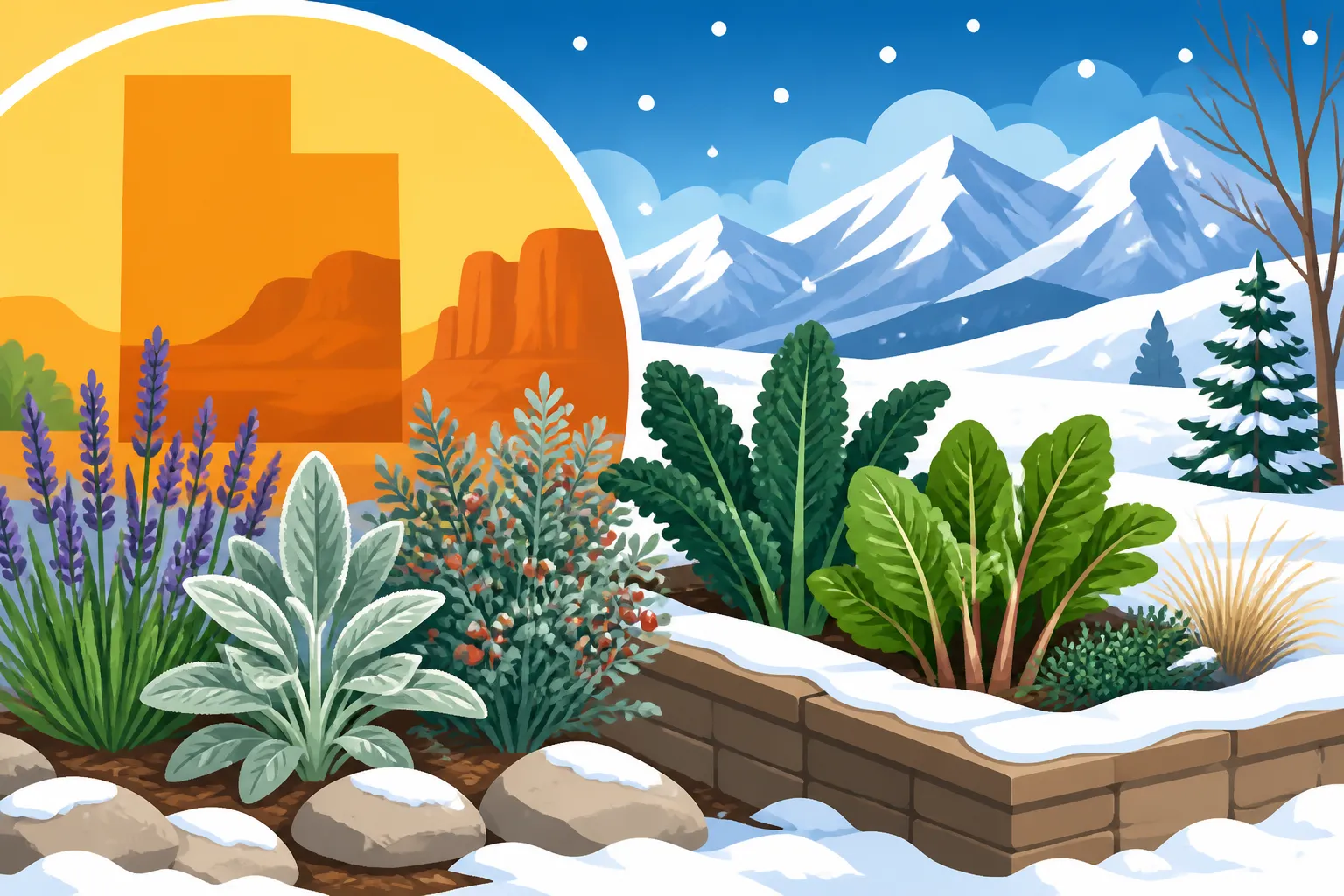
What Utah Gardeners Can Plant to Survive Cold Winters
Utah gardeners need plants that can handle more than a low winter temperature. Dry soil, wind, snow cover, sudden thaws, spring freezes, and elevation all affect what survives. This guide explains which food crops and landscape plants are worth considering, how to match them to your yard, and how to help new plantings establish before winter.
What winter survival means in Utah
A plant described as cold-hardy may survive winter in one Utah yard and struggle in another. The label is a starting point, not a guarantee. A plant’s chances depend on its genetics, how well it is established, the condition of its roots, and the weather around it.
Utah’s terrain creates a wide range of growing conditions. A sheltered garden in a lower valley is not the same as an exposed site on a higher bench or in a mountain valley. Cold air can settle in low spots, while nearby walls and pavement can hold heat. Wind can dry out evergreen foliage and exposed soil. Snow may insulate plants in one place but leave another site bare. Winter thaws can also prompt early growth that is vulnerable when cold returns.
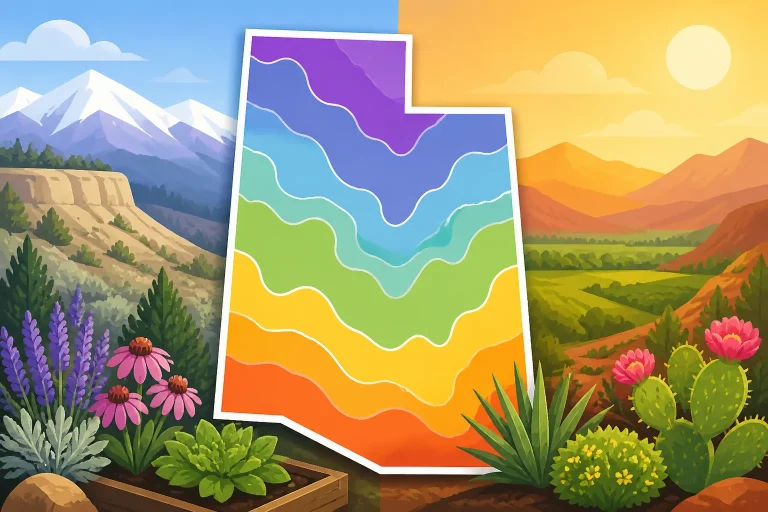
The USDA Plant Hardiness Zone Map can help screen plants by average annual extreme minimum winter temperatures. It does not measure summer heat, the length of the growing season, late spring freezes, or local wind and drainage. Use it alongside details about your site and the plant’s specific needs. What USDA Plant Hardiness Zones Measure: Extreme Winter Cold Limits explains what the map can and cannot tell you, while Looking Up Your Utah USDA Plant Hardiness Zone by ZIP Code is a useful starting point for finding the zone that applies to your broader area. A ZIP code does not describe every garden in it, and a zone is not a planting calendar.
It also helps to distinguish between surviving winter and staying productive through it:
- A hardy perennial returns after winter, though it may die back aboveground.
- A hardy woody plant keeps its roots and framework alive, but exposed stems may still suffer damage.
- A winter vegetable may tolerate cold or continue growing slowly, but it may not be ready to harvest all winter.
- A plant protected by snow, mulch, or a sheltering wall may survive conditions it would not tolerate in an exposed bed.
A useful short list of cold-tolerant plants is only a beginning. Before buying, check the plant’s hardiness information, mature size, water needs, and suitability for your part of Utah. Then consider whether your site is windy, shaded, exposed to afternoon sun, or prone to standing water. The most dependable choice is one suited to both the regional climate and the spot where it will grow.
Edible perennials that can return after winter
Perennial food plants can be a good choice for gardeners who want harvests without replanting an entire bed every year. Their aboveground growth may be damaged or die back, but an established plant can produce again from its roots or crown. In Utah, the right selection depends on both winter cold and summer conditions.
Fruit trees and small fruits
Apples, pears, cherries, and plums are grown in many Utah gardens, but a fruit tree’s ability to tolerate winter is only one part of choosing it. A tree also needs suitable chilling conditions, enough room, appropriate pollination, and a site where spring bloom is not routinely exposed to damaging freezes. A tree that survives the winter may still have a poor fruit crop if its blossoms are damaged or it does not receive suitable pollination.
Check the tree’s recommended growing conditions, including its cold tolerance and pollination needs, before purchasing. Also check how large it is likely to become and whether its roots and canopy can fit the planting site. The growing requirements of apples, pears, cherries, and plums are not interchangeable. Backyard Fruit Production Guide for Utah Climates offers broader planning considerations, and Do You Need a Second Apple Tree for Cross-Pollination? can help if an apple tree is on your list.
Currants and gooseberries are often worth considering where a small fruit shrub is a better fit than a tree. They can tolerate cold winters, but conditions still matter: plants need suitable light, room for airflow, and water that reaches the root zone during establishment. Raspberries are another option, though their canes have different lifespans and care needs. A cold-tolerant fruit plant is not automatically low-maintenance; pruning, irrigation, and pest monitoring still affect its health and harvest.
When comparing small fruits, consider how you will harvest and maintain them, not just whether they survive winter. Ask whether the plant spreads by suckers, needs support, or requires a particular pruning approach. For choices suited to different conditions, see Selecting Reliable Berry Bushes for Utah Gardens and Why Gooseberries and Currants Thrive Across Cold Utah Valleys.
Perennial vegetables and herbs
Rhubarb is a familiar perennial vegetable for cooler climates. Once established, its crown can survive winter and send up new stems in spring. It needs room to grow and a site with soil that drains rather than staying saturated. Harvesting should be managed so the plant can maintain healthy growth; do not treat it as a crop that can be stripped whenever stems appear.
Asparagus is another perennial crop that returns from crowns. It takes time to establish, so it is best for gardeners willing to reserve a bed for a long-term planting rather than expect a full harvest immediately. Its tops die back as the season ends, while the crown remains belowground. Good drainage and weed control help keep the planting productive.
Chives and some other perennial herbs can also return after cold weather. They may disappear or look rough during winter and then regrow when conditions suit them. Perennial herbs are not all equally cold-hardy, however. Rosemary, for example, can be vulnerable to winter cold, especially in exposed sites or poorly drained soil. Treat the hardiness listed for a particular plant as a limit to investigate, not a promise that it will be evergreen or undamaged. Overwintering Garden Herbs: Hardy Versus Tender Types covers the difference between herbs that can return and those that need more protection.
A perennial bed also needs a realistic plan for Utah’s dry summers. Winter hardiness does not mean a plant can establish without irrigation. New plants need consistent care while their roots grow into surrounding soil, and established plants may still need supplemental water during dry periods. Match plants with similar water needs in the same bed so one plant is not kept too wet or too dry for the sake of its neighbors.
Cold-tolerant vegetables for fall, winter, and early spring
Vegetable gardeners can extend the season with crops that tolerate cool weather. Some endure light frosts, some tolerate deeper cold, and some survive only when soil, snow, or a cover provides additional insulation. In a Utah garden, the timing of sowing and the protection available can be as important as the crop itself.
Spinach and kale are common choices for cool-season beds. They can tolerate cold better than many warm-season crops, but their growth slows as temperatures drop. A plant that is healthy going into winter has a better chance of surviving than a small, recently sown seedling. Cold-tolerant greens may remain available for harvest during mild periods, but frozen soil or severe weather can make picking difficult.
Root crops such as carrots, beets, and turnips can also be part of a fall garden. Depending on conditions, the roots may be harvested before deep cold or left in the ground temporarily under protective mulch. Leaving a crop in place is not risk-free: very cold soil, freeze-thaw cycles, waterlogged ground, or an extended cold spell can damage it. Consider the likely weather and your ability to harvest before the ground becomes difficult to work.
Garlic is commonly planted in fall so it can establish roots before winter and resume growth in spring. The planting window varies with location, soil conditions, and the onset of frozen ground. Why Fall Garlic Planting Succeeds in Utah Backyard Beds explains why timing and establishment matter, while Planting Garlic Before Ground Freezes Along the Wasatch Front focuses on a regional version of the same decision.
| Crop or crop group | What cold tolerance can mean | Practical planning point |
|---|---|---|
| Spinach and kale | May tolerate frost and cool conditions; growth can slow or stop in winter | Aim for sturdy plants before the coldest weather and consider a cover |
| Carrots, beets, and turnips | Roots may remain in the ground for a period if conditions allow | Plan to harvest before the soil becomes too frozen to work |
| Garlic | Can establish roots before winter and resume growth in spring | Plant early enough to establish, but confirm timing for your location |
| Rhubarb and asparagus | Perennial crowns can survive winter and regrow | Choose a permanent, well-drained site and allow time for establishment |
| Warm-season vegetables | Usually damaged by frost and cold soil | Plant after conditions are suitable rather than relying on winter hardiness |
A protective cover can soften cold exposure, but it does not make every crop safe in every freeze. Covers can also trap heat on sunny days, so they may need attention as temperatures rise. For practical comparisons of season extension and waiting for warmer conditions, see Using Season Extension Covers vs Waiting for Warm Utah Soils and Using Row Covers to Shield Utah Gardens From Light Frosts.
For the best chance of a fall harvest, work backward from the time the crop needs to mature. The growing season varies with elevation and local weather, so statewide rules of thumb can mislead. Calculating Days to Maturity Before First Fall Freeze can help with crop timing, and Fast-Growing Fall Vegetables to Sow After Utah Summer Crops covers vegetables suited to a later sowing. A crop that survives cold may still fail to reach harvest size if it is planted too late.
Landscape plants that can handle cold and dry conditions
Landscape plants face a different set of winter stresses from vegetables. Their roots may be expected to remain in place for years, and their leaves or stems may be exposed to wind, sun, and drying soil through the cold season. Choose plants for the specific conditions in your yard rather than relying on a general label such as “winter hardy.”
Native and adapted perennials
Utah native plants and regionally adapted plants can be useful choices, but “native” does not mean every species will thrive everywhere in the state. A plant native to one type of Utah habitat may be poorly suited to a different elevation, soil, or watering pattern. Check the plant’s natural growing conditions and choose one that matches the site.
Perennials such as penstemons and yarrow are examples of groups that include plants suited to dry or cold conditions, but species and cultivars can differ. Rabbitbrush and serviceberry are other regional options to investigate where their mature size, soil, and water needs fit. A plant’s ability to survive winter is just one part of the decision: flower timing, wildlife use, spreading habit, and maintenance may matter too.
Start with the location’s sun and soil. A dry, sunny slope calls for a different selection than a shaded bed beneath trees or a low area where water collects. Utah Native Gardening for Beginners: Getting Started at Home offers a framework for planning a locally appropriate planting, and Matching Water-Wise Plants to Utah Yard Conditions helps connect plant choices to site conditions.
Woody shrubs and trees
Cold-tolerant shrubs and trees can provide structure and shelter, but they need enough room to reach mature size. Before planting, check the expected width and height, branch structure, water needs, and exposure requirements. A shrub that is crowded against a building may need repeated pruning, while a large tree planted too close to a path or utility line can become difficult to manage.
Native or adapted shrubs are often a sensible starting point for tough conditions, but regional fit still matters. Some plants tolerate winter cold but struggle with saturated soil; others cope with dry summers but need protection while young. Evergreen plants can be especially exposed to winter drying when wind and sun pull moisture from foliage while roots cannot take up enough water from frozen or dry soil.
Consider the full landscape rather than selecting one plant at a time. A windbreak or a group of shrubs can reduce exposure for more delicate plants, but dense planting can also compete for water and shade neighboring plants. Leave the spacing recommended for mature plants instead of packing a bed for immediate fullness. For more options and design considerations, see Native Shrubs and Perennials That Thrive With Little Water and Water-Wise Ornamental Trees for Utah Backyards.
Bulbs and ornamental grasses
Many spring-flowering bulbs spend winter belowground and emerge when conditions become suitable. Their ability to persist depends on the bulb, planting depth, drainage, and the summer conditions that follow bloom. A bulb can survive winter yet fail to flower well if it is planted in poorly drained soil or if its foliage is removed before it has finished storing energy.
Ornamental grasses also vary in winter response. Some keep their structure through cold weather, while others die back and need to be cut or tidied later. Snow and wind can flatten tall growth, so placement matters. Give grasses the room they need and avoid assuming that a plant will remain upright or green all winter simply because it is cold-tolerant.
Choose bulbs and grasses for the bed’s light and water conditions, and follow the plant’s guidance for planting and care. When to Plant Spring-Flowering Bulbs in Utah Gardens and Selecting Ornamental Grasses for Utah Flower Borders provide more detailed planning help.
Match plants to the actual conditions in your yard
The best way to reduce winter losses is to notice the conditions that affect each planting spot. A garden can contain several small climates: the sheltered side of a building, a hot strip beside pavement, a windy corner, and a low point where cold air collects.
Check exposure, drainage, and winter moisture
Observe the site through more than one season if possible. Note where snow accumulates and where wind removes it, which areas thaw first, and where water sits after rain or irrigation. A sunny wall may warm a spot during winter days, but the rapid temperature change can also encourage early growth. A low area may have calmer air but be more vulnerable to pooled cold air.
Drainage matters because many plants tolerate cold better when roots are not sitting in wet soil. If a bed stays saturated after irrigation or precipitation, choose plants suited to those conditions or address the drainage problem before planting. Do not assume that adding more water or fertilizer will make a poorly matched plant more resilient.
Winter dryness is another concern, especially for evergreens and newly planted shrubs. Frozen soil can restrict water uptake, and wind can increase moisture loss from foliage. This does not mean watering on a fixed winter schedule. Instead, assess soil conditions when it is possible to do so and provide appropriate moisture before the ground freezes if the soil is dry. Avoid leaving plants waterlogged.
Treat the zone as a screening tool
A hardiness zone can help you eliminate plants that are clearly unsuitable for your area, but it cannot predict whether a plant will succeed in a particular garden. Two yards in the same broad area may differ in elevation, slope, exposure, snow cover, and irrigation. Why Statewide Zone Maps Miss Utah Neighborhood Microclimates explains why local conditions matter, and How Utah Elevation and Cold Air Drainage Shift Spring Planting Dates covers two factors that can change both winter exposure and spring timing.
When comparing plant labels or nursery information, look for details beyond a single zone number. Ask what conditions the plant tolerates, whether it needs protection while young, and how it performs with the soil and water available in your yard. If information is unclear, seek guidance from a reputable local nursery or Utah State University Extension resources. A local recommendation is most useful when it accounts for the actual planting site rather than just the nearest city.
Make a short site inventory
Before buying, write down the conditions for each planting area:
- Sun exposure through the growing season
- Whether the ground drains quickly or stays wet
- Exposure to wind and reflected heat
- Whether snow tends to cover or blow away
- Nearby walls, pavement, fences, and large trees
- Space available for the plant at mature size
- How much irrigation the area can receive
This inventory helps prevent a common mismatch: selecting a plant because it tolerates cold, then placing it in soil or exposure that undermines its health. It also makes it easier to group plants with similar water needs, which is especially useful in an arid climate.
Establish cold-hardy plants before winter
A plant’s first winter is often harder than later winters. It may not yet have a broad root system, sturdy stems, or the ability to draw on stored resources. Good planting practices cannot change the weather, but they can reduce avoidable stress.
Choose an appropriate planting window
Planting too late can leave a perennial or shrub without enough time to settle in before the ground freezes. Planting too early in hot weather can also be stressful, particularly if the plant is not watered appropriately. The best window depends on the plant, local conditions, and whether the plant is sold as a seed, bare-root plant, or container-grown specimen.
For vegetables, match planting to soil conditions and the crop’s temperature needs. Cold-tolerant crops may be sown earlier or later than warm-season crops, but “tolerates cold” does not mean that seeds will germinate quickly in cold ground. The Utah Vegetable Planting Calendar: What to Sow Spring to Fall provides a seasonal overview, and How Utah Gardeners Find Exact Spring Planting Windows explains why a nearby weather station and local conditions can be more useful than a statewide date.
When buying trees, shrubs, or perennials, check whether the seller recommends spring or fall planting for that plant and location. A plant with a limited establishment period may be better planted when it can develop roots under favorable conditions before severe heat or cold. If the ideal window has passed, waiting may be safer than rushing a stressed plant into the ground.
Prepare the planting site without overcorrecting the soil
Start by assessing the existing soil and its drainage. Avoid creating a planting hole that differs sharply from the surrounding soil in a way that can hold water around the roots. Set the plant at the recommended depth, spread roots as appropriate, and backfill carefully so the soil contacts the root system without being packed into a hard mass.
Do not add amendments automatically. Plants differ, and a broad soil improvement plan may not suit every bed. For soil questions, Guide to Managing Utah Alkaline Soils and Garden Amendments discusses common considerations, while Testing Soil for Native Utah Plants: When a Lab Sample Helps explains when a test may help inform decisions.
Mulch can moderate soil temperature, reduce evaporation, and limit weeds, but keep it away from the crown or trunk as appropriate for the plant. A deep pile against a trunk can hold moisture where it is not wanted. Applying Tree Mulch Without Piling Material Against the Bark covers the basics for woody plants.
Water for establishment, then prepare for winter
New plantings need careful watering while roots develop. The right amount and frequency depend on the plant, soil, weather, and irrigation method. Check moisture in the root zone rather than relying only on the surface appearance of the bed. A dry surface does not always mean the roots are dry, and a damp surface does not prove that water reached deeply enough.
As winter approaches, avoid forcing tender late growth with unnecessary inputs. The goal is a healthy, established plant, not rapid growth just before cold weather. If soil is dry before it freezes, appropriate watering can help prevent winter stress, but saturated ground can create other problems. Follow plant-specific guidance and local recommendations rather than using a single schedule for every garden.
Mulch may help protect roots from rapid temperature swings, but it is not a substitute for choosing a suitable plant or correcting poor drainage. Covers can protect some vegetables or tender plants during a short cold event, but they need to be secured and monitored. For sudden freezes, Covering Utah Seedlings When a Sudden Spring Freeze Hits offers relevant advice for young crops, while Do Protective Covers Make Planting Early in Utah Worth It? weighs the benefits against the extra work.
Build a practical planting plan for winter resilience
A resilient garden does not have to be made entirely of rugged plants. It needs a mix that suits the site, with the most vulnerable plants placed where they have the best chance and the toughest choices used in the most exposed areas.
Start by deciding what you want the garden to do. A food garden might prioritize perennial fruit, a few long-lived vegetables, and seasonal cold-tolerant crops. A landscape bed might focus on shrubs and perennials that fit local water conditions and mature size. A small yard may need compact plants or containers, while a larger property may have room for trees and wind shelter.
Next, sort your candidates by what they need:
- Winter exposure: Can the plant tolerate the cold expected in the area, and does it need shelter?
- Water: Will it fit the bed’s irrigation and drainage conditions?
- Light: Does the site provide the sun or shade it needs?
- Space: Can it reach mature size without crowding paths, buildings, or neighboring plants?
- Maintenance: Does it need pruning, seasonal protection, or regular harvesting?
- Purpose: Does it provide food, flowers, shade, wildlife value, or year-round structure?
Avoid planting every new perennial in the most exposed spot at once. Test a small number of plants in different parts of the yard, then observe how they respond through winter and spring. Keep notes on where snow rests, which plants show wind damage, where soil stays wet, and which areas warm early. That information can guide the next planting season.
For a mixed landscape, group plants with similar water requirements and leave adequate space for air movement and future growth. In a vegetable bed, separate crops by season and plan for the time needed to mature before fall cold. In a fruit planting, account for pollination, maintenance, and spring frost risk as well as winter survival. Planning for the whole growing cycle is more reliable than choosing plants from a hardiness list alone.
Finally, expect some losses. Utah weather can vary from year to year, and even a suitable plant can be damaged by an unusual cold event, poor drainage, drought stress, or a late freeze. Replace failures with a better-matched plant or a better location rather than repeatedly repeating the same mismatch. What to Harvest and Protect Before the First Utah Frost can help with seasonal decisions at the other end of the growing season, and How Long Is the Freeze-Free Growing Season Across Utah? explains why the available growing window differs across the state.
Frequently Asked Questions
What are the most reliable cold-tolerant plants for a Utah garden?
There is no single best list for every Utah location. Garlic, spinach, kale, rhubarb, asparagus, and some fruit shrubs are possibilities to investigate, along with regionally suitable native and adapted landscape plants. Check each plant’s cold tolerance, water needs, and fit for your specific site.
Does a plant that survives winter also survive Utah summers?
Not necessarily. Winter hardiness does not mean tolerance of summer heat, intense sun, arid soil, or limited water. Check both winter and summer requirements before planting.
Can mulch keep a plant alive through a severe winter?
Mulch can help moderate soil temperature and reduce moisture loss, but it cannot guarantee survival. Plant selection, drainage, establishment, exposure, and the severity of the weather still matter.
Are native plants automatically the best choice?
Native plants can be well suited to regional conditions, but a plant native to one part of Utah may not match another location’s elevation, soil, or moisture. Choose a species based on its habitat and the conditions in your yard.
Disclaimer
This article is for general informational purposes only and does not constitute professional advice. Laws, prices and regulations vary by location and change over time. Consult a qualified professional for guidance on your specific situation. Utah Gardening Guide is not a government agency and is not affiliated with any university extension, state department of agriculture or other government agency.